
Research Flow Cytometers
As a pioneer in flow cytometry, with the first impedance-based flow cytometer introduced in 1953, Beckman Coulter Life Sciences continues to lead innovation in research flow cytometry solutions. Our mission is to empower scientists to push the boundaries of discovery by providing technologies that reveal deeper insights into complex biological systems.
Advance Your Research with High-Sensitivity Flow Cytometry
Our research flow cytometers are engineered to help you:
- Detect rare cell populations with enhanced sensitivity
- Achieve precise multicolor analysis with optimized optics
- Generate reproducible, high-quality data across experiments
- Streamline workflows with intuitive, user-friendly systems
Whether you're conducting immunology, cancer research, or cell biology studies, our platforms are built to support your most demanding applications.
CytoFLEX Platform: Compact Power, Exceptional Performance
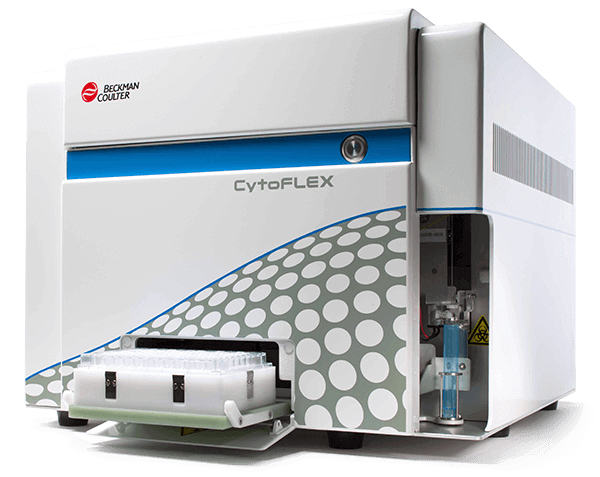
The CytoFLEX Platform represents a breakthrough in benchtop flow cytometry, combining advanced optical design with ease of use.


CytoFLEX mosaic Spectral Detection Module
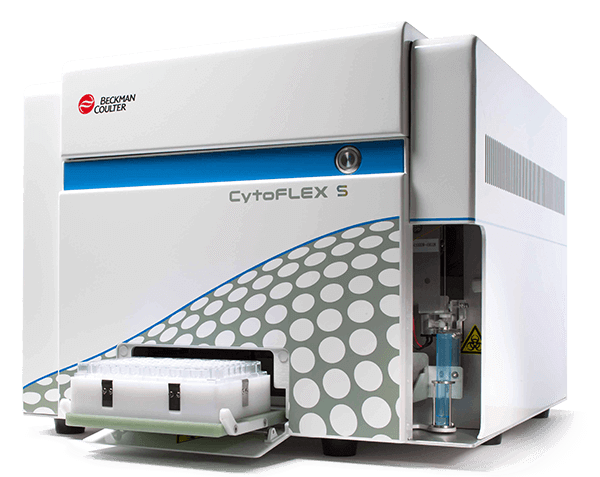
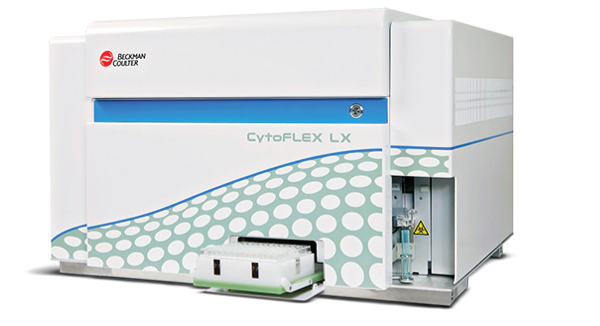
The CytoFLEX mosaic spectral detection module represents the next step in the evolution of our CytoFLEX platform. It provides spectral capabilities for our CytoFLEX S* and LX instruments. With this module, you can mix and match different detection methods in one instrument, increasing capacity without the need to invest in a new independent instrument.
We understand that resources and sustainability are critical considerations. That's why we've introduced spectral technology as a modular detection concept, allowing you to enhance your capabilities while future-proofing your existing instruments.
Research Flow Cytometers FAQs
What software is used with research flow cytometers?
Flow cytometry software supports instrument setup, data acquisition, quality control, analysis, and reporting. Depending on your workflow, software can also simplify experiment setup and enable advanced data visualization and interpretation.
What research applications can flow cytometers support?
Research flow cytometers support a wide range of applications, including immunology, oncology, stem cell research, cell therapy, extracellular vesicle (EV) analysis, apoptosis studies, cell cycle analysis, and high-dimensional single-cell research. Different instrument configurations are designed to meet varying experimental needs.
What is a research flow cytometer?
A research flow cytometer is an instrument used to analyze the physical and fluorescent characteristics of individual cells or particles in suspension. Researchers use flow cytometers for applications such as immunophenotyping, cell biology, extracellular vesicle (EV) research, and multi-parameter analysis to better understand complex biological systems.
How do I choose the right research flow cytometer?
The best research flow cytometer depends on your application, the number of parameters you need to measure, sample throughput, and future scalability. Researchers should consider factors such as laser configuration, detector capabilities, sensitivity, ease of use, software, and whether conventional or spectral detection is best suited for their workflow.
Can I upgrade my existing flow cytometer with spectral capabilities?
Some research flow cytometer platforms offer modular upgrades that allow researchers to add spectral detection without replacing their existing instruments. This approach can help expand experimental capabilities while protecting previous instrument investments.
